Does someone at your house eat baby food? Consider making your own! Making your own baby food has multiple benefits:
1. You know the source of your child's food. Food-born illness epidemics (E. Coli in Spinach, salmonella in peanut butter, etc.) are most often spread through food that has been subjected to multiple handling, processing, and packaging steps.
2. Easier access to wide varieties of vegetarian, vegan, and/or organic foods for your child.
3. Cheaper than buying the individual, tiny containers.
4. Less packaging waste. Even recycling the glass containers uses energy that isn't required when you make your own.
How easy is it to make your own baby food? Really easy! A blender, food processor, or kitchen food mill can easily make baby food at home. But small, portable food mills that you can stick in your kid's diaper bag abound too! For an example, check out the Wean Machine. You can even find light and portable food mills at stores like Whole Foods.
Showing posts with label baby. Show all posts
Showing posts with label baby. Show all posts
07 June 2009

13 April 2009
Carpets

It's important to pick out carpets and rugs for your home that are environmentally healthy. After all, you spend many, many hours a day breathing around the stuff, don't you?
The problem with carpets: VOCs. Green is Sexy says, "Most carpet is made from petroleum byproducts and synthetics, treated with stain repellents, backed with latex, and padded with PVC." Pretty yucky stuff to let inside your body.
Good options: Rugs made from recycled plastic, like these, are especially good for outdoor spaces. For the indoors, good options include "natural fiber carpets made from chemical-free wool, jute, sea grass, sisal, coir (coconut-husk fiber), and even corn. When the time comes to dump those, you ditch them in the compost" (Ibid). Other natural fiber choices include hemp and reed, like the Japanese Igusa mats.
Certification: Look for the Green Label Plus Certification. "Check the carpet label for a little green house, which means it’s been tested by the Carpet and Rug Institute’s (CRI) Indoor Air Quality testing program" (Ibid). This will ensure your rug is not going to make you sick.
Better options: If possible, you may want to avoid wall-to-wall carpeting all together. Low Impact Living says, "Natural, bare flooring options like reclaimed hardwood flooring or Marmoleum are really the best option from a health perspective–because they don’t trap allergens and chemicals like rugs and carpets do... Cork is a wonderful option because it is a renewable resource, dampens sounds (great for sleeping babies), and is soft on little bodies. Cork is harvested by shaving off the 'bark' of the tree– trees are not killed in the process."
More ideas and details, check out Low Impact Living's great article here.
And no matter what your flooring choices, always leave your shoes at the door to reduce the amounts of pollutants and dangerous chemicals you bring into your home.
Image from http://s7d4.scene7.com/is/image/Gaiam/18-0077?$large$
08 February 2009
Feeding Baby
We've all heard about the myriad of benefits of eating organic foods. But even if you've not committed to eating organic yourself, you should seriously consider it for your infants and children. We all want our children to get the best start in life possible. And feeding them wholesome foods grown without chemicals and pesticides is one important way to do that.
Luckily, organic baby food is getting easier and easier to find. Gerber even makes a line of organic baby foods, which Wal-Mart carries, for goodness sake. This article is about six other good options for organic baby foods.
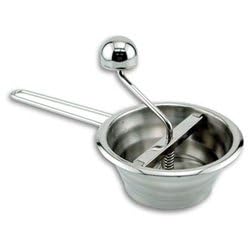
One great option, of course, is making your own baby food. You can use your normal kitchen blender or food processor to make it, or your can buy a hand-cranked grinder for less than $20, which makes preparing baby food on the go fast and easy. You can freeze it in ice cube trays for later, or just make as much as you need for one meal. And because you're not left with mounds of plastic or glass jars, it's a cheap, waste-free way to feed baby!
Image from http://ecx.images-amazon.com/images/I/21YQYAS0EWL._SL500_AA250_.jpg
20 January 2009
Breastfeeding Cover-Ups

I am 100% in favor of free and open breastfeeding in public and private places. How insulting is it that society has co-opted women's breasts as sexual objects instead of the shame-free mammary glands that they really are.
However, not all communities are comfortable with women's lifecycles as natural and normal. And sometimes, it's just plain cold! So, if you have a new baby you're breastfeeding and don't feel comfortable breast feeding openly in public (or it's winter!), consider a cover-up. Using a cover-up in a public place is a great "in between" step to help move society in the direction of feeling comfortable with breastfeeding as natural.
The one pictured here is from "The Undercover Baby." They offer cute and stylish designs in organic cotton. Check them out if you are or will soon be a breastfeeding mother or know someone who is!
PLUS: Through Jan. 31st, they're all 20% off!
Image from http://www.theundercoverbaby.com/assets/images/homepic2.jpg
12 January 2009
Home decor sales
Style Saves the World (original article here) says,
"I've raved before about the great organic and hemp linens that Amenity offers...now you can get 30% off the entire site (including sale items!). Enter 2009 at checkout. Expires 2/1/09.
"Need other sustainably made goodies for your home? Get 25% off at Branch by entering DCBRANCH at checkout. Excludes furniture and sale items."
Amenity has beautiful linens for the home and the nursery. Branch offers a wide range of things, including biodegradable/compostable disposable plates, bowls, cups, and silverware. So, if you need sheets, linens, home decor, party supplies, etc., consider these green options.
"I've raved before about the great organic and hemp linens that Amenity offers...now you can get 30% off the entire site (including sale items!). Enter 2009 at checkout. Expires 2/1/09.
"Need other sustainably made goodies for your home? Get 25% off at Branch by entering DCBRANCH at checkout. Excludes furniture and sale items."
Amenity has beautiful linens for the home and the nursery. Branch offers a wide range of things, including biodegradable/compostable disposable plates, bowls, cups, and silverware. So, if you need sheets, linens, home decor, party supplies, etc., consider these green options.
14 December 2008
Cute kids!

I joke that Ben and I are gonna have the coolest kid on the block. I mean, just look at all the cute sustainable kids-wear that's already out today. Imagine what the selection will be in a few years!
UglyFish Organics has adorable music-themed tops made from organic cotton. Shirts say: "Listen," "Strum Something" (my favorite), "Old Soul," and "Find Your Bass Line." Perfect for your own little grunge star!
Under the Nile offers organic Egyptian cotton clothing, cloth diapers, toys, blankets, etc. Nothing too funky on this site. Just lots of healthy, organic choices in pastels.
Chapter One Organics has really fun, colorful clothes for infants and toddlers. It also offers blankets, bibs, and even a children's book about factory farming vs. organic farming. This brand is a member of Co-Op America, whose "mission is to harness economic power—the strength of consumers, investors, businesses, and the marketplace—to create a socially just and environmentally sustainable society."
Swell Foop also has organic, co-op cotton. They make clothes for infants, toddlers, and adults that feature adorable animals on 'em. Plus, they donate 10% of their proceeds to environmental organizations that can help you help them save the world.
Bebop Baby Shop features cute clothes in organic cotton, including the innovative kimono style onesie. Footwear, hats, leg warmers, too. Organic slings and baby carriers. Bamboo products and natural toys. Really, quite a selection to meet many of your baby needs.
Little Chickie Wear sells 100% organic cotton onesies, tops, and hats with cute, simple designs.
Shoes are no problem either! Check out Satch & Sol for some adorable, eco-friendly, fair trade shoes. Much, much better for humanity than the normal sweatshop-made varieties.
So, next time you go to a baby shower, or a little one's birthday comes around, think sustainable!
07 December 2008
"Eco-Pregnancy Makes for Healthy Babies"
Check out this article from Low Impact Living:
Many women discover the green lifestyle when they are expecting, or become moms. Wanting to do the best you can for your child includes considerations that you make before your baby is even born – after all, that’s why you’ve given up wine, right? Everyone knows that eating right and getting enough rest will help both mother and baby be healthy, but the green movement has opened our eyes to the effects that the world around us can have as well.
Many women discover the green lifestyle when they are expecting, or become moms. Wanting to do the best you can for your child includes considerations that you make before your baby is even born – after all, that’s why you’ve given up wine, right? Everyone knows that eating right and getting enough rest will help both mother and baby be healthy, but the green movement has opened our eyes to the effects that the world around us can have as well.
Back in 2005, a frightening study by the Environmental Working Group (EWG) found chemicals in the blood of the umbilical cords from 10 newborn babies. These chemicals were linked to cancer, birth defects, and hormone disruptions, and included lead, mercury and PCBs. Since then, moms-to-be have demanded more information about reducing the impact of the chemical soup that we all live in.
We Are What We Eat
According to most studies, it’s not clear whether organic food has higher nutritional value than its non-organic counterparts. Regardless, one thing is for sure: organic food contains fewer chemicals. Organic food is grown without artificial fertilizers, conventional pesticides, or sewage sludge, and processed without ionizing radiation and food additives. That stuff is gross, whether you’re pregnant or not. To label a food product organic, it must be certified by the National Organic Program, which is run by the U.S. Department of Agriculture (USDA). A USDA Organic seal indicates that the product contains at least 95% organic ingredients, so look for this label.
Eating the fresh fruits and vegetables recommended for everyone, but particularly pregnant women, may also help you to avoid Bisphenol-A (BPA), a toxic chemical found in the linings of food cans. Most recently linked to plastic baby bottles, it can also be found in canned infant formula, as well as canned adult foods like soup, fruit and soda. BPA has been linked to breast cancer and infertility, and there is concern that exposure can affect fetal and infant brain development. Scary stuff, so try to avoid processed foods and stick to real, whole food whenever possible.
Once you have that food home, it’s important to prepare it carefully. Use cast iron or stainless steel cookware – Teflon and other non-stick surfaces have been shown to emit toxic chemicals when preheated to high temperatures, which can occur in just a few minutes. In fact, these chemicals are a known hazard to pet birds, causing lung hemorrhaging and death, so it can’t be good for us either. Particles of non-stick surfaces are also found in food itself.
Most pregnant women know to eat only low mercury fish, avoiding species like tuna and swordfish. For a complete list of sustainable and healthy seafood, download a Seafood Watch card from the Monterey Bay Aquarium. You should also filter your tap water, as pollutants may lurk there. Check out the EWG’s Tap Water Quality Database to see what your city’s water may include, then take a look at our recent post on water filters to help you decide on the one that’s right for you.
Personal Care and Cleaning Products
Without knowing it, we slather chemicals on ourselves in alarming quantities. Women, on average, use 12 personal care products per day. Look for better choices products in the EWG’s searchable Skin Deep Database. The database includes a rating for each product on its developmental/reproductive toxicity, which includes birth defects and developmental delays for children. Phthalates are particularly harmful for boys, while the EWG recommends that everyone avoid perfume, cologne, or products with added fragrance. The database also has a section for products just for kids.
Cleaning products are another key source of toxic chemicals in the home. Whatever you spray on your counters or floors makes its way into your system and thus into your baby. Check out our selection of eco-friendly cleaning supplies, use plants to clean the air, and open windows whenever possible.
Make Your Nursery a Safe Space
It’s just as important to provide a healthy nursery for your little one! Visit our post on green kids, including green furniture, bedding, low-VOC paints, plus the age-old debate over diapers: cloth or disposable? Be careful when painting or renovating while pregnant, as the chemicals can pass through to your baby.
Let’s Have a Baby Shower
OK, enough of the scary stuff, it’s time to celebrate! Turn your baby shower green by asking for pre-worn clothes and other used goods, or natural products. Check out environmentally-friendly invitations and favors, like those at ecoparti. Request non-plastic items and reusable packaging to inspire guests’ creativity. They can wrap used books in an organic cotton baby blanket, or give a bundle of healthy, eco-friendly baby skin-care products.
Now all that’s left is to actually have the baby!
16 November 2008
A Healthy Nursery

When you're setting up a nursery for your little one or looking into baby shower gifts, remember to choose items that are good for baby and good for Mother (Earth). Amenity Modern Organic Living has a new nursery line with crib accessories, blankets, pillows, and furniture. Adorable prints are just the icing on the cake, as these products are make of organic and sustainable materials. Choosing organic materials for baby is vital, since conventionally grown cotton is one of the most pesticide-laden crops grown.
Amenity has organic bedding for adult beds, too, as well as table runners, placemats, napkins, wall decor, throws, and more. Treat yourself to some pesticide-free cotton, too!
For more options, Egg has a whole line of organic baby clothes and bedding.
21 September 2008
More Socks!

For socks, tights, scarves, t-shirts, lounge pants, and even sock monkeys, check out Maggie's Functional Organics. Made using organic cotton, Maggie's clothing is cute and affordable.
They even have a section for baby and children's clothes and socks. When your kid is growing a size a week (or so it seems, at least), you can reduce his or her impact by choosing organic (or consignment).
Now, before you go to Maggie's and get scared off, I'll warn you: they do offer tie-dyed clothes. Try to ignore it, and focus on the functional and/or the cute offerings.
I, for one, want a pair of those leg warmers. But, alas, I can't imagine where I'd need them...
Also, Nimli offers organic socks for women and infants, too. Just more options!
19 August 2008
More Diapers!
This weekend we visited our parents' homes, and my in-laws mentioned my blog. I think they've absorbed a thing or two from it, which is great. But my father-in-law actually ridiculed our view about cloth diapers, saying that he bets we will change our minds when we have our first baby. Sure, a funny joke, but a little insulting, in light of all the changes we have already made and those that we will continue to make in the seven to ten years between now and when we have children. I cannot imagine using disposable products now, let alone in a decade!
But on the way home from our trip, Ben and I discussed the diaper issue again. We said that no matter how strongly we feel on the issue, it would be irresponsible to claim that we know we'll use cloth diapers for our children. We can, however, know that we use rags instead of paper towels, cloth napkins instead of paper ones, cloth menstrual pads instead of disposable products. In other words, we have an ever-improving track record on very comparable issues.
However, as on many issues, we believe that in ten years there will be a completely different range of products and options from which to choose. Maybe we would use disposable diapers if they were biodegradable, compostable, and made from 100% post-consumer materials. [Check out Nature Babycare for a pretty good disposable option like this.] We don't know what our set of options will be then. In 2008 though, cloth is our best choice.
Enter Earth 911's article "Another Player in the Diaper Dillema." The article introduces a third option: flushable diapers. They combine a cloth outer diaper with a plastic-free, flushable insert. Pretty good option, eh? Check them out!
But on the way home from our trip, Ben and I discussed the diaper issue again. We said that no matter how strongly we feel on the issue, it would be irresponsible to claim that we know we'll use cloth diapers for our children. We can, however, know that we use rags instead of paper towels, cloth napkins instead of paper ones, cloth menstrual pads instead of disposable products. In other words, we have an ever-improving track record on very comparable issues.
However, as on many issues, we believe that in ten years there will be a completely different range of products and options from which to choose. Maybe we would use disposable diapers if they were biodegradable, compostable, and made from 100% post-consumer materials. [Check out Nature Babycare for a pretty good disposable option like this.] We don't know what our set of options will be then. In 2008 though, cloth is our best choice.
Enter Earth 911's article "Another Player in the Diaper Dillema." The article introduces a third option: flushable diapers. They combine a cloth outer diaper with a plastic-free, flushable insert. Pretty good option, eh? Check them out!
20 July 2008
Diapers
An important question all environmentally-aware parents face is what type of diapers to use for their children. You have two primary options: disposable or cloth. The first thing the anti-cloth crowd will argue is that, in a study done by Procter and Gamble in 2000 claimed that cloth diapers had similar environmental impacts to disposable diapers after you take laundering them into consideration. Right... Procter and Gamble who *gasp* makes disposable diapers! Trust this study completely, don't we?
But let's pretend for a moment we do believe this study. If there is any validity in this study, it is nonetheless a quite flawed study. First of all, if you are already using environmentally responsible laundering methods, laundering your cloth diapers should not make nearly as big an environmental impact as the study supposed. Secondly, if you choose organic cloth for your diapers, the impact of creating the diapers plummets once more. Third, many children who wear cloth diapers learn to potty train earlier than their disposable-wearing counterparts because they can feel the moisture against their skin. Thus, you'll be laundering your diapers even fewer times than the study supposed. Overall, you can see, the Procter and Gamble (cough, cough) study had the chips stacked against cloth diapers.
Read what the revered No Impact Man has to say about his experience with cloth diapers and his daughter here.
And for some darn cute cloth diapers, check out Blueberry's website.
Update: Green Is Sexy has an amazing post on diapers. Please check it out for excellent analysis, tips, and recommendations.
Image from http://ecofabulous.blogs.com
But let's pretend for a moment we do believe this study. If there is any validity in this study, it is nonetheless a quite flawed study. First of all, if you are already using environmentally responsible laundering methods, laundering your cloth diapers should not make nearly as big an environmental impact as the study supposed. Secondly, if you choose organic cloth for your diapers, the impact of creating the diapers plummets once more. Third, many children who wear cloth diapers learn to
potty train earlier than their disposable-wearing counterparts because they can feel the moisture against their skin. Thus, you'll be laundering your diapers even fewer times than the study supposed. Overall, you can see, the Procter and Gamble (cough, cough) study had the chips stacked against cloth diapers.Read what the revered No Impact Man has to say about his experience with cloth diapers and his daughter here.
And for some darn cute cloth diapers, check out Blueberry's website.
Update: Green Is Sexy has an amazing post on diapers. Please check it out for excellent analysis, tips, and recommendations.
Image from http://ecofabulous.blogs.com
Subscribe to:
Posts (Atom)

 Posts
Posts


