Do a lot of printing or photocopying? There are a number of ways you can move toward sustainability:
1. Print/copy less. Yes, it is obvious, but printing or copying fewer pages is the most effective way to be more sustainable in your habits. With the use of computers and the Internet, very few things ever need to be printed anymore. For many people, printing out emails, memos, or bank statements may just be an ingrained habit. If you are in this category, try to reduce your printing by a little each week. Same goes for photocopying. Can you scan the document and keep an electronic copy instead? You may find that you really like having the back-ups, searchability, and space-saving qualities of electronic sources better!
2. Recycled paper. Use paper with the highest recycled content as you can. The most important thing to look for is the percentage of post-consumer recycled content.
3. Reuse paper. Try to always print and photocopy on both sides of a piece of paper if applicable, even if this means you have to manually reload the pages into the machine. This cuts down your paper use by half! Also, if you have one-paged documents that are no longer needed, cut them into quarters and use the blank sides for notes to yourself or others. [This quartering method works great for junk mail, too!]
4. Use less paper. If there's something online that you absolutely must print, consider getting the most "printer friendly" version possible. Some websites already have "printer friendly version" options, but many do not. But there's help! Print Friendly is a free webapp that cuts the page down to only the important stuff. You can use Print Friendly here or learn more about it in this LifeHacker article.
5. Use less ink. This is the newest arrival to the sustainability in printing and copying scene. Ink and toner are not only expensive; they can also be unhealthy. Plus, many companies produce cartridges that cannot be refilled. Every time your cartridge gets empty, you are adding more plastic to the landfills. One way to use less ink is to consider the new "ecofont." This font uses 20% less ink without negatively impacting readability. You can download it for free here.
Showing posts with label recycle. Show all posts
Showing posts with label recycle. Show all posts
26 August 2009

13 April 2009
Carpets

It's important to pick out carpets and rugs for your home that are environmentally healthy. After all, you spend many, many hours a day breathing around the stuff, don't you?
The problem with carpets: VOCs. Green is Sexy says, "Most carpet is made from petroleum byproducts and synthetics, treated with stain repellents, backed with latex, and padded with PVC." Pretty yucky stuff to let inside your body.
Good options: Rugs made from recycled plastic, like these, are especially good for outdoor spaces. For the indoors, good options include "natural fiber carpets made from chemical-free wool, jute, sea grass, sisal, coir (coconut-husk fiber), and even corn. When the time comes to dump those, you ditch them in the compost" (Ibid). Other natural fiber choices include hemp and reed, like the Japanese Igusa mats.
Certification: Look for the Green Label Plus Certification. "Check the carpet label for a little green house, which means it’s been tested by the Carpet and Rug Institute’s (CRI) Indoor Air Quality testing program" (Ibid). This will ensure your rug is not going to make you sick.
Better options: If possible, you may want to avoid wall-to-wall carpeting all together. Low Impact Living says, "Natural, bare flooring options like reclaimed hardwood flooring or Marmoleum are really the best option from a health perspective–because they don’t trap allergens and chemicals like rugs and carpets do... Cork is a wonderful option because it is a renewable resource, dampens sounds (great for sleeping babies), and is soft on little bodies. Cork is harvested by shaving off the 'bark' of the tree– trees are not killed in the process."
More ideas and details, check out Low Impact Living's great article here.
And no matter what your flooring choices, always leave your shoes at the door to reduce the amounts of pollutants and dangerous chemicals you bring into your home.
Image from http://s7d4.scene7.com/is/image/Gaiam/18-0077?$large$
13 February 2009
Rechargeable Batteries
Rechargeable batteries are certainly the way to go. Although they are more of an initial investment, rechargeable batteries have much longer lifespans than the old kind. This means less energy that goes into the production and shipment of new batteries; it also means fewer batteries in landfills.
Which rechargeable batteries are the best? An article on TreeHugger says, "Duracell batteries lasted far longer - ranging from about 5 to 6.5 hours in life compared to the 3.5 hours of Energizer. Additionally Duracell one-ups Energizer in that its batteries come pre-charged and hold a charge for a year, compared to Energizer's 6 months."
Remember that rechargeable batteries come in almost any size you need. AA and AAA batteries can be found easily at any grocery store, Wal-Mart, Best Buy, etc. But you can also easily order C, D, and 9V batteries on the Internet, as well as other sizes.
02 February 2009
Resolutions?
Remember your green new year's resolutions? How are they going? Let me know if I can help!
If you've forgotten yours, or never got around to making one, read over this list from Ecofabulous. Of course, these lists are useful outside of just resolutions though. They help us analyze where we are in our sustainability journey and focus on how to go forward.
Eco Resolutions and Solutions
If you've forgotten yours, or never got around to making one, read over this list from Ecofabulous. Of course, these lists are useful outside of just resolutions though. They help us analyze where we are in our sustainability journey and focus on how to go forward.
Eco Resolutions and Solutions
1. I will stop using plastic bottles and vow to carry my reusable bottle of choice at all times. The NRDC conducted 1,000 separate tests of over 100 bottled water brands and found that the bottled water was not cleaner, purer, or safer than tap water. There have been reports on certain companies simply bottling tap water. So kick the bad bottle habit once and for all. Sigg or Klean Kanteen are great, and lately we’re really loving Earthlust’s custom designs. As an added bonus you can wrap this resolution into the annual “I will save more” declaration and make a jar where each day you put the money you would have spent on bottled water – you’ll be surprised at how it adds up. In 2006, Americans bought 2.6 billion cases of bottled water, totaling $15 billion – a year of plastic bottle money and you may be able to treat yourself to an eco-vacation.
2. I resolve to make at least two small changes in order to use less energy. This year, while you may not be able to install solar panels on your roof, you can make small changes to your energy usage habits that will have a big impact. First, as inefficient incandescent light bulbs burn out, replace them with compact fluorescent bulbs – they last much longer (8-10 times longer) and save money by reducing energy use (typically by 65 to 80 percent). And second, get ride of that haunting phantom load – the electricity wasted when electronics are plugged in but either aren’t on, or aren’t in use (this goes for that fully charged computer or cell phone that’s left plugged in as well). The U.S. Department of Energy estimates that American households use about 43 kWh of electricity each year to power electronics and appliances that are turned off. Plug all your electronics into a power strip and turn it off when the items are not in use – if every American eliminated their phantom load, it would save about $6 billion in electricity costs.
3. Waste: The light green resolution – I will recycle. If you want to take your green routine a shade deeper, then make 2009 the year you start to compost. Really, 2009 holds no excuses for not recycling. Cities and towns are making it easier and easier since most have curbside pick-up. If you are ever in question about whether an item can be recycled, or how to recycle it, check out earth911.com. Encourage your workplace to switch to recycled paper products wherever possible. Since 4 million tons of copy paper are used in the U.S. each year, buying paper with 100 percent recycled fibers uses less energy and water in production and will significantly reduce the number of trees cut down. As for the eco-devotees that are ready for the next step, start to compost your kitchen scraps. According to the EPA, 24 percent of the waste Americans send to landfills is organic waste. We love the Can-O-Worms in-house compost bin. It’s a great way to start reducing your landfill contributions by almost a quarter!
4. If I can schedule in time for the gym and happy hour drinks with friends, I can schedule in the extra time needed to walk or bike to work. Give the road rage a rest and try committing to an alternative form of transportation once a week. Ideally, the carbon-free route is best (with a little added endorphin boost for the traditional “exercise more” resolution) but taking the bus or train will still help to minimize your carbon footprint – according to the American Public Transportation Association, using public transportation saves 1.4 billion gallons of gasoline each year.
5. I will resolve to consider where my food comes from and how it is farmed. Ideally, supporting seasonal, local agriculture from organic, sustainably managed farms is best. This doesn’t have to mean a weekly trip to the farmer’s market – you can sign up for a CSA or simply make a conscious choice at the grocery store when looking at that apple from New Zealand. As you are committing to cut back on your carbon-emitting transportation, try to cut back on your food’s footprint as well. Where it is coming from and the amount of toxic pesticides used are both contributing factors to how much waste and carbon emissions are generated – one study by the Rodale Institute found that organic farming reduces carbon dioxide by using 37 percent fewer fossil fuels than conventional farming.
08 January 2009
Choosing a dishwasher
A recent article from Green Is Sexy outlined a few things sustainability-minded buyers should look for when buying a dishwasher. I've added some links to make these tips more useful. Pay special attention to the last one! Here's why the article has to say:
1) Seek out the star. ENERGY STAR is a government-backed program that helps consumers identify the most energy-efficient products.
2) Compare wash cycle times - the shorter the better.
3) Try to avoid heated dry - air drying is just as good, greener and costs less. Some machines have the option of turning it off which is good but others leave it off the panel completely which is even better.
If you’re not a first time buyer make sure your old machine gets another life. Most dishwashers are made of recycled steel already so add yours to the heap. Check with the installers of the new one to see if they will recycle the old - they usually do.
------
Consumer Reports hosts a "Greener Choices" website now. If you normally consult buyer's guides like Consumer Reports before major purchases, consider GreenerChoices.org. In this case, here is their Green Buying Guide for Dishwashers (published 9/08).
17 December 2008
Holiday cards

Holiday cards have been sent and received for this season. They hang beautifully from our doors or refrigerators or bulletin boards. We enjoy them for a month or so, until the holiday spirit fades.
What do you do with old holiday cards? Keep them, of course! Almost every card you receive can make at least one really good gift tag. Some can make three or four! It's a great way to get more enjoyment from your beautiful cards. Once you've cut out some lovely gift tags, recycle with rest of the card. It's easy, cost-effective, and, best of all, green!
Maybe you'll want to send out more cards to your friends and family next year. Be careful, of course, when you're picking out next year's greetings that you don't buy cards that are made of first-use paper and unhealthy inks. Instead, look for cards made of recycled paper and soy- or vegetable-based inks.
Red Stamp, for example, offers over 100 different eco-friendly cards. They even offer photo cards, if that's your tradition, made from recycled paper and printed with soy-based inks. You can find a whole slew of cute holiday cards at Seltzer Goods. Their cards and envelops are made from 100% recycled paper and made in America. They're also printed with veggie-based inks.
Another great option is Etsy, which is an online resource for handmade items from across the nation. Some artists on Etsy use eco-friendly materials in their cards. (I love these, pictured above.) The holiday cards you'll find on Etsy don't cost any more than store-bought options, AND you'll be supporting individual artists, not corporations and sweatshops. It's quite easy to search the entire database on Etsy, so you don't have to look through each artist to find fun holiday cards.
Of course, more creative green card options exist, too. Zanisa, for instance, sells cards with Christmas tree ornaments made from handmade recycled paper embedded with seeds. These cool cards serve three purposes: you send them as holiday greetings, the ornaments decorate the receipients' trees, and, if the receipients throw the ornaments in some dirt after the holidays, the world is beautified -- and carbon sequestered -- by some pretty flowers. (Don't have any spare dirt? Consider guerilla gardening.)
Another option with auxiliary benefits: getting your holiday cards from a non-profit organization. The Sierra Club, for example, offers lovely card choices made from recycled paper and soy-based inks that feature nature photographs.
Remember, holiday cards typically go on deeply discounted sale right after Christmas. If you're the type to plan for next Christmas on Dec. 26, be sure to look for cards made from recycled paper and soy-based inks. And enjoy!
04 December 2008
Wrapping those holiday gifts
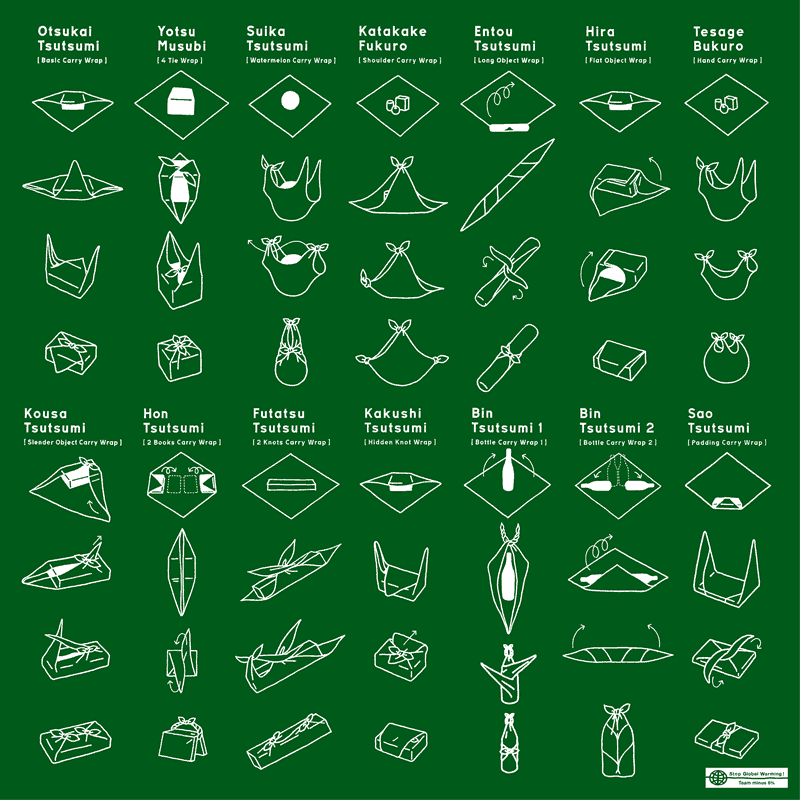
Choosing a method of wrapping gifts can be a challenge when you're learning to be green. Let's look at the options and figure out together, shall we?
Option 1: One certainly does not want to use traditional wrapping paper or gift bags. Full of chemicals, heavy metals, and synthetic inks, it is certainly the least green source. Plus, purchasing it means more trees must be harvested and processed, and more wrapping paper must be shipped out, all with a high carbon price tag.
[Do note that there are more eco-friendly wrapping papers and bags available out there, made of hemp, etc. These solve many of the problems with traditional wrapping papers. However, you are still wasting resources unnecessarily, even if those resources are renewable. Options 3 and 4, below, are better choices.]
Option 2: Last year, I hand-decorated a couple of brown paper grocery bags and used those to wrap my family's gifts. A much better option than traditional wrapping paper. Plus, the gifts I gave had extra value added because of the time and care I put into creating my own wrapping paper. This year, however, we bring reusable grocery bags into stores with us, so we only have one spare paper bag lying around to be used.
Intentionally getting paper bags at the grocery store in order to wrap with them is not appropriate. It requires the production of resources separate from those that would otherwise need to be made. Bring your cloth bags to the store. It doesn't count as "reusing" if you didn't have to use it in the first place. So, paper bags are a no-go.
Option 3: Found paper, on the other hand, is a good idea. If you get the newspaper, use pages of that to wrap gifts. But, again, do not buy a newspaper specifically for wrapping paper!
Try to use the wrapping paper from last year's gifts if you removed it carefully and kept it. And this Christmas try to save the wrapping paper that other people use on your gifts.
But after you open those gifts wrapped in traditional wrapping paper, consider asking the gift-giver to wrap your gifts using a no-waste method next year. My parents have been doing so for years and don't mind. They realize that opening gifts on Christmas morning would be less enjoyable for Ben and me if we were feeling guilty about the paper our gifts had required. Keep this in mind as you wrap gifts for others. You want them to feel happy, not guilt-ridden.
*Note: You can recycle paper with tape on it. Remember that over the holidays!
Option 4: Over the past year, I've been trying to wrap all the presents I give others in cloth. I get odd size measures of cloth from thrift store, thus taking the cloth out of the waste stream since it's too small to be used for large, grand projects. (It is really quite easy to find cloth in any thrift store. You typically have your choice of colors and patterns. It's not a sacrifice when it comes to style.) Cloth is a good choice because it is extremely apt for reuse, so it creates no waste.
For birthdays, etc. it has been possible for me to experiment with sewing the fabric into appropriately-sized sacks or draw-string bags. Again, I think this form of gift wrapping is more meaningful than using traditional wrapping paper because I am putting a large amount of time, thought, and effort into each gift. I hope this makes the recipients feel good about themselves because it is, in part, my way of expressing how special they are to me.
Christmas, however, is overwhelming. Gifts for all our parents and siblings equals a ton of sewing (and a ton of time for me, since I'm not too good with my sewing machine yet). It's possible to use cloth just like wrapping paper, except you use safety pins or just ribbons to hold it together instead of tape.
But there's a prettier way.
Furoshiki, the Japanese art of using cloth swatches to wrap and carry any- and everything, is an excellent idea for gift wrapping. The picture above shows just some of the shapes you can wrap and how your gifts will turn out looking. Check out this link for more information. Lots more info can be found by performing a simple Internet search for "furoshiki."
So, in conclusion:
-Traditional wrapping paper/gift bags = really bad
-Paper grocery bags = better, as long as you recycle it (but you're better off using cloth grocery bags exclusively when you go shopping and, thus, not procuring any of these bags to use)
-Reused paper (like newspaper or last year's gift wrapping) = good, as long as you recycle it (but these materials still have a limited life span)
-Cloth swatches or bags = really good
If you get stuck, just remember your three R's (recycle, reuse, reduce).
No, go enjoy the holidays!
Image found at http://gadgets.boingboing.net/2008/01/02/furoshiki-elegant-ja.html
Subscribe to:
Posts (Atom)

 Posts


