A great holiday gift idea -- or simply a green addition to your own routine: To-Go Ware. They sell tiffins (stainless steel carry-out containers, also great as lunchboxes, etc.) and reusable, bamboo flatware. We've been a huge fan of the tiffins we bought from them about a year ago, and we'd certainly recommend them. We've gotten a huge amount of use out of them!
This week (through Dec. 14) you can get 25% off on all purchases over $10 by using the coupon code HOLIDAY25. Check them out!
http://www.to-goware.com/
UPDATE: The sale is now good through Dec. 25! Same code as above.
Showing posts with label reuse. Show all posts
Showing posts with label reuse. Show all posts
08 December 2009

14 October 2009
Eye Glasses
If you find yourself at the optometrist in need of new glasses, think carefully about what you'll do with your old pair. Most optometrists have a little box from the Lion's Club in their office where you can donate your old glasses to a worthy cause.
What happens after you drop off your old glasses? According to the Lion's Club website, "volunteers clean, sort by prescription strength and package the glasses. Most of the recycled glasses are distributed to people in need in developing countries where they will have the greatest impact."
It's not only prescription eye glasses you can donate to the Lions Club. The organization says, "Lions accept prescription and reading glasses, sunglasses and plastic and metal frames. Children's glasses are especially needed."
Just another easy way to reuse valuable resources -- and help a good cause.
26 August 2009
Printing and Photocopying
Do a lot of printing or photocopying? There are a number of ways you can move toward sustainability:
1. Print/copy less. Yes, it is obvious, but printing or copying fewer pages is the most effective way to be more sustainable in your habits. With the use of computers and the Internet, very few things ever need to be printed anymore. For many people, printing out emails, memos, or bank statements may just be an ingrained habit. If you are in this category, try to reduce your printing by a little each week. Same goes for photocopying. Can you scan the document and keep an electronic copy instead? You may find that you really like having the back-ups, searchability, and space-saving qualities of electronic sources better!
2. Recycled paper. Use paper with the highest recycled content as you can. The most important thing to look for is the percentage of post-consumer recycled content.
3. Reuse paper. Try to always print and photocopy on both sides of a piece of paper if applicable, even if this means you have to manually reload the pages into the machine. This cuts down your paper use by half! Also, if you have one-paged documents that are no longer needed, cut them into quarters and use the blank sides for notes to yourself or others. [This quartering method works great for junk mail, too!]
4. Use less paper. If there's something online that you absolutely must print, consider getting the most "printer friendly" version possible. Some websites already have "printer friendly version" options, but many do not. But there's help! Print Friendly is a free webapp that cuts the page down to only the important stuff. You can use Print Friendly here or learn more about it in this LifeHacker article.
5. Use less ink. This is the newest arrival to the sustainability in printing and copying scene. Ink and toner are not only expensive; they can also be unhealthy. Plus, many companies produce cartridges that cannot be refilled. Every time your cartridge gets empty, you are adding more plastic to the landfills. One way to use less ink is to consider the new "ecofont." This font uses 20% less ink without negatively impacting readability. You can download it for free here.
28 June 2009
Sustainable Feminine Hygiene
One of the fastest, easiest, and most rewarding changes you can make in your lifestyle today is switching to reusable menstruation products.
Why?
1. They are so much more cost effective than disposables over the course of just a couple of months.
2. They produce far, far less trash.
3. They don't put you at risk of TSS like tampons do.
4. They are healthier for your body than most disposables. (If you are going to continue using disposables, you should at least switch to brands that don't use fragrances, dyes, or bleach and do use organic fibers.)
5. Many people believe that the use of disposable products harms the relationship women have with their bodies because it implies that a natural, healthy process is dirty and shameful. Though an intangible benefit, the use of reusable products, over time, can help women (and society in general) mend this pernicious relationship. [I mean, for real. I'm sure half of my readers are squirming just to see an article about menstruation. There's clearly something wrong with what we've been taught.]
What's available?
1. Internal-use/tampon replacement: The Diva Cup. Read this very thorough FAQ website to learn more.
2. External-use/disposable pad replacements: Reusable, washable pads. LOTS of options out there. Choosing ones made from organic cotton is even better for the earth and your body. I recommend starting by checking out Lunapads. Glad Rags is another trusted brand for many women.
If you have any questions at all about sustainable feminine hygiene or these products in particular, please ask away! I will be more that happy to answer them. I truly believe the almost instantaneous benefits you'll get from switching from disposables to reusables are incredibly important...and so easy to get!
04 December 2008
Wrapping those holiday gifts
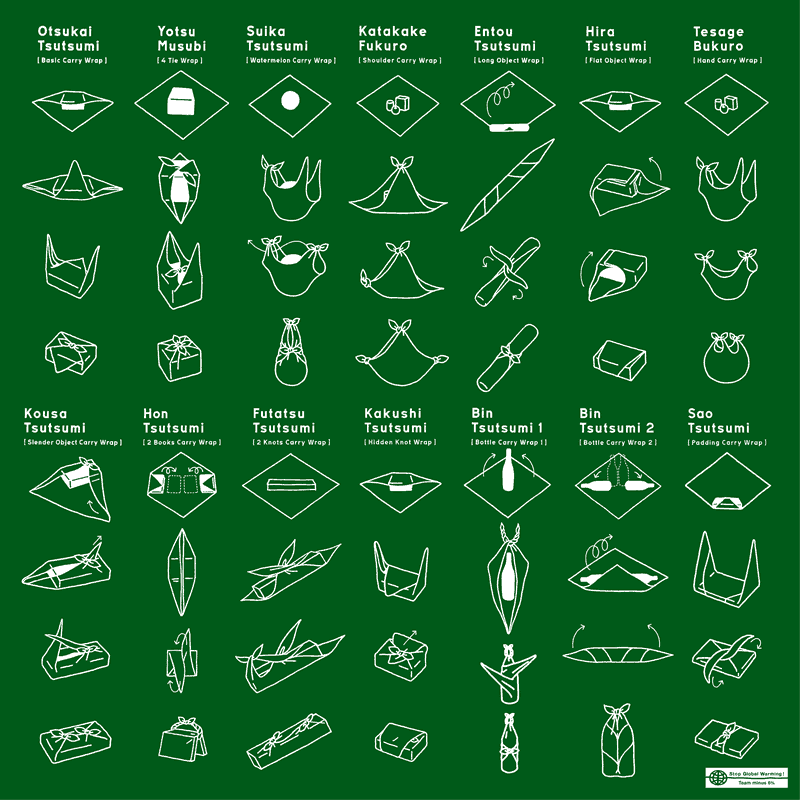
Choosing a method of wrapping gifts can be a challenge when you're learning to be green. Let's look at the options and figure out together, shall we?
Option 1: One certainly does not want to use traditional wrapping paper or gift bags. Full of chemicals, heavy metals, and synthetic inks, it is certainly the least green source. Plus, purchasing it means more trees must be harvested and processed, and more wrapping paper must be shipped out, all with a high carbon price tag.
[Do note that there are more eco-friendly wrapping papers and bags available out there, made of hemp, etc. These solve many of the problems with traditional wrapping papers. However, you are still wasting resources unnecessarily, even if those resources are renewable. Options 3 and 4, below, are better choices.]
Option 2: Last year, I hand-decorated a couple of brown paper grocery bags and used those to wrap my family's gifts. A much better option than traditional wrapping paper. Plus, the gifts I gave had extra value added because of the time and care I put into creating my own wrapping paper. This year, however, we bring reusable grocery bags into stores with us, so we only have one spare paper bag lying around to be used.
Intentionally getting paper bags at the grocery store in order to wrap with them is not appropriate. It requires the production of resources separate from those that would otherwise need to be made. Bring your cloth bags to the store. It doesn't count as "reusing" if you didn't have to use it in the first place. So, paper bags are a no-go.
Option 3: Found paper, on the other hand, is a good idea. If you get the newspaper, use pages of that to wrap gifts. But, again, do not buy a newspaper specifically for wrapping paper!
Try to use the wrapping paper from last year's gifts if you removed it carefully and kept it. And this Christmas try to save the wrapping paper that other people use on your gifts.
But after you open those gifts wrapped in traditional wrapping paper, consider asking the gift-giver to wrap your gifts using a no-waste method next year. My parents have been doing so for years and don't mind. They realize that opening gifts on Christmas morning would be less enjoyable for Ben and me if we were feeling guilty about the paper our gifts had required. Keep this in mind as you wrap gifts for others. You want them to feel happy, not guilt-ridden.
*Note: You can recycle paper with tape on it. Remember that over the holidays!
Option 4: Over the past year, I've been trying to wrap all the presents I give others in cloth. I get odd size measures of cloth from thrift store, thus taking the cloth out of the waste stream since it's too small to be used for large, grand projects. (It is really quite easy to find cloth in any thrift store. You typically have your choice of colors and patterns. It's not a sacrifice when it comes to style.) Cloth is a good choice because it is extremely apt for reuse, so it creates no waste.
For birthdays, etc. it has been possible for me to experiment with sewing the fabric into appropriately-sized sacks or draw-string bags. Again, I think this form of gift wrapping is more meaningful than using traditional wrapping paper because I am putting a large amount of time, thought, and effort into each gift. I hope this makes the recipients feel good about themselves because it is, in part, my way of expressing how special they are to me.
Christmas, however, is overwhelming. Gifts for all our parents and siblings equals a ton of sewing (and a ton of time for me, since I'm not too good with my sewing machine yet). It's possible to use cloth just like wrapping paper, except you use safety pins or just ribbons to hold it together instead of tape.
But there's a prettier way.
Furoshiki, the Japanese art of using cloth swatches to wrap and carry any- and everything, is an excellent idea for gift wrapping. The picture above shows just some of the shapes you can wrap and how your gifts will turn out looking. Check out this link for more information. Lots more info can be found by performing a simple Internet search for "furoshiki."
So, in conclusion:
-Traditional wrapping paper/gift bags = really bad
-Paper grocery bags = better, as long as you recycle it (but you're better off using cloth grocery bags exclusively when you go shopping and, thus, not procuring any of these bags to use)
-Reused paper (like newspaper or last year's gift wrapping) = good, as long as you recycle it (but these materials still have a limited life span)
-Cloth swatches or bags = really good
If you get stuck, just remember your three R's (recycle, reuse, reduce).
No, go enjoy the holidays!
Image found at http://gadgets.boingboing.net/2008/01/02/furoshiki-elegant-ja.html
Subscribe to:
Posts (Atom)

 Posts


